Wind Power

Wind power is the conversion of wind energy into a useful form of energy, such as using wind turbines to make electricity, windmills for mechanical power, windpumps for water pumping or drainage, or sails to propel ships.

Hydropower

Hydro-power system (hydroelectric power) is a clean source of energy systems that can neither pollute or be consumed during its operation. Learn more here.

Solar Energy

There is a renewed focus as more and more people see the advantages of solar energy and as it becomes more and more affordable. Learn more about solar energy here!

10 WAYS TO KEEP COOL AT HOME WITHOUT AIR-COND

Save energy during hot day. It’s easy to keep your house cool without air conditioning. Employing a few basic environmentally friendly principals will help keep you cool and will help you save money.

10 TIPS TO SAVE ENERGY, MONEY IN YOUR HOME

A whopping 46 percent of home energy use is, umm, energy loss! In other words, no productive energy use at all! Here are simple ways of reversing this, mostly by changes of habit.

Showing posts with label Hydropower. Show all posts

Disadvantages of Hydropower

Ecosystem damage and loss of land

Large reservoirs required for the operation of hydroelectric power stations result in submersion of extensive areas upstream of the dams, destroying biologically rich and productive lowland and riverine valley forests, marshland and grasslands. The loss of land is often exacerbated by the fact that reservoirs cause habitat fragmentation of surrounding areas.

Hydroelectric projects can be disruptive to surrounding aquatic ecosystems both upstream and downstream of the plant site. For instance, studies have shown that dams along the Atlantic and Pacific coasts of North America have reduced salmon populations by preventing access to spawning grounds upstream, even though most dams in salmon habitat have fish ladders installed. Salmon spawn are also harmed on their migration to sea when they must pass through turbines. This has led to some areas transporting smolt downstream by barge during parts of the year. In some cases dams, such as the Marmot Dam, have been demolished due to the high impact on fish. Turbine and power-plant designs that are easier on aquatic life are an active area of research. Mitigation measures such as fish ladders may be required at new projects or as a condition of re-licensing of existing projects.


Generation of hydroelectric power changes the downstream river environment. Water exiting a turbine usually contains very little suspended sediment, which can lead to scouring of river beds and loss of riverbanks. Since turbine gates are often opened intermittently, rapid or even daily fluctuations in river flow are observed. For example, in the Grand Canyon, the daily cyclic flow variation caused by Glen Canyon Dam was found to be contributing to erosion of sand bars. Dissolved oxygen content of the water may change from pre-construction conditions. Depending on the location, water exiting from turbines is typically much warmer than the pre-dam water, which can change aquatic faunal populations, including endangered species, and prevent natural freezing processes from occurring. Some hydroelectric projects also use canals to divert a river at a shallower gradient to increase the head of the scheme. In some cases, the entire river may be diverted leaving a dry riverbed. Examples include the Tekapo and Pukaki Rivers in New Zealand.


Siltation

When water flows it has the ability to transport particles heavier than itself downstream. This has a negative effect on dams and subsequently their power stations, particularly those on rivers or within catchment areas with high siltation. Siltation can fill a reservoir and reduce its capacity to control floods along with causing additional horizontal pressure on the upstream portion of the dam. Eventually, some reservoirs can become completely full of sediment and useless or over-top during a flood and fail. See Risks to the Glen Canyon Dam for a specific example.


Flow shortage

Changes in the amount of river flow will correlate with the amount of energy produced by a dam. Lower river flows because of drought, climate change or upstream dams and diversions will reduce the amount of live storage in a reservoir therefore reducing the amount of water that can be used for hydroelectricity. The result of diminished river flow can be power shortages in areas that depend heavily on hydroelectric power.


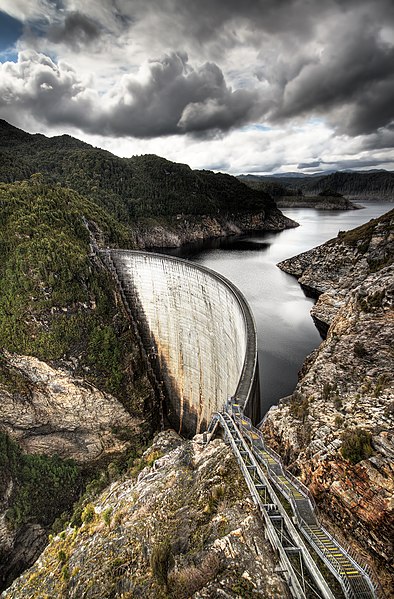
Advantages of Hydropower

Economics

The major advantage of hydroelectricity is elimination of the cost of fuel. The cost of operating a hydroelectric plant is nearly immune to increases in the cost of fossil fuels such as oil, natural gas or coal, and no imports are needed.

Hydroelectric plants have long economic lives, with some plants still in service after 50–100 years. Operating labor cost is also usually low, as plants are automated and have few personnel on site during normal operation.

Where a dam serves multiple purposes, a hydroelectric plant may be added with relatively low construction cost, providing a useful revenue stream to offset the costs of dam operation. It has been calculated that the sale of electricity from the Three Gorges Dam will cover the construction costs after 5 to 8 years of full generation.


CO2 emissions

Since hydroelectric dams do not burn fossil fuels, they do not directly produce carbon dioxide. While some carbon dioxide is produced during manufacture and construction of the project, this is a tiny fraction of the operating emissions of equivalent fossil-fuel electricity generation. One measurement of greenhouse gas related another externality comparison between energy sources can be found in the ExternE project by the Paul Scherrer Institut and the University of Stuttgart which was funded by the European Commission. According to that study, hydroelectricity produces the least amount of greenhouse gases and externality of any energy source. Coming in second place was wind, third was nuclear energy, and fourth was solar photovoltaic. The extremely positive greenhouse gas impact of hydroelectricity is found especially in temperate climates. The above study was for local energy in Europe; presumably similar conditions prevail in North America and Northern Asia, which all see a regular, natural freeze/thaw cycle (with associated seasonal plant decay and regrowth).


Other uses of the reservoir

Reservoirs created by hydroelectric schemes often provide facilities for water sports, and become tourist attractions themselves. In some countries, aquaculture in reservoirs is common. Multi-use dams installed for irrigation support agriculture with a relatively constant water supply. Large hydro dams can control floods, which would otherwise affect people living downstream of the project.


About Hydropower

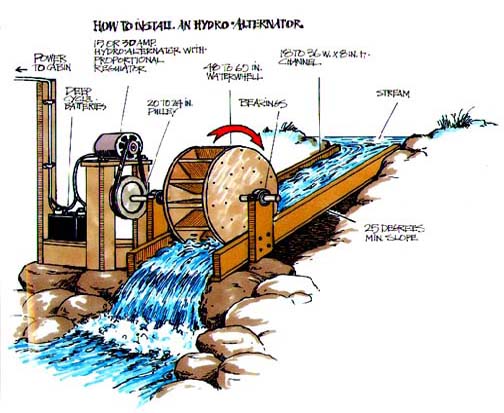
Hydropower, hydraulic power or water power is power that is derived from the force or energy of moving water, which may be harnessed for useful purposes. Prior to the development of electric power, hydropower was used for irrigation, and operation of various machines, such as watermills, textile machines, sawmills, dock cranes, and domestic lifts.


Another method used a trompe to produce compressed air from falling water, which could then be used to power other machinery at a distance from the water.


In hydrology, hydropower is manifested in the force of the water on the riverbed and banks of a river. It is particularly powerful when the river is in flood. The force of the water results in the removal of sediment and other materials from the riverbed and banks of the river, causing erosion and other alterations.


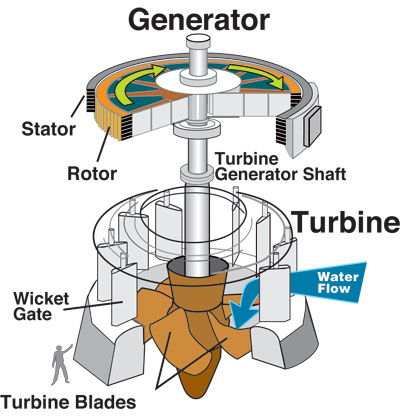
Hydroelectricity is the term referring to electricity generated by hydropower; the production of electrical power through the use of the gravitational force of falling or flowing water. It is the most widely used form of renewable energy. Once a hydroelectric complex is constructed, the project produces no direct waste, and has a considerably lower output level of the greenhouse gas carbon dioxide (CO2) than fossil fuel powered energy plants. Worldwide, an installed capacity of 777 GWe supplied 2998 TWh of hydroelectricity in 2006. This was approximately 20% of the world's electricity, and accounted for about 88% of electricity from renewable sources.


History of Hydropower

Early uses of waterpower date back to Mesopotamia and ancient Egypt, where irrigation has been used since the 6th millennium BC and water clocks had been used since the early 2nd millennium BC. Other early examples of water power include the Qanat system in ancient Persia and the Turpan water system in ancient China.


Waterwheels and mills

Hydropower has been used for hundreds of years. In India, water wheels and watermills were built; in Imperial Rome, water powered mills produced flour from grain, and were also used for sawing timber and stone; in China, watermills were widely used since the Han Dynasty. The power of a wave of water released from a tank was used for extraction of metal ores in a method known as hushing. The method was first used at the Dolaucothi gold mine in Wales from 75 AD onwards, but had been developed in Spain at such mines as Las Medulas. Hushing was also widely used in Britain in the Medieval and later periods to extract lead and tin ores. It later evolved into hydraulic mining when used during the California gold rush.


In China and the rest of the Far East, hydraulically operated "pot wheel" pumps raised water into irrigation canals. At the beginning of the Industrial revolution in Britain, water was the main source of power for new inventions such as Richard Arkwright's water frame. Although the use of water power gave way to steam power in many of the larger mills and factories, it was still used during the 18th and 19th centuries for many smaller operations, such as driving the bellows in small blast furnaces (e.g. the Dyfi Furnace) and gristmills, such as those built at Saint Anthony Falls, which uses the 50-foot (15 m) drop in the Mississippi River.

In the 1830s, at the peak of the canal-building era, hydropower was used to transport barge traffic up and down steep hills using inclined plane railroads.


Hydraulic power pipes

Hydraulic power networks also existed, using pipes carrying pressurized liquid to transmit mechanical power from a power source, such as a pump, to end users. These were extensive in Victorian cities in the United Kingdom. A hydraulic power network was also in use in Geneva, Switzerland. The world famous Jet d'Eau was originally the only over pressure valve of this network.


Compressed air hydro

Where there is a plentiful head of water it can be made to generate compressed air directly without moving parts. A falling column of water is mixed with air bubbles generated through turbulence at the inlet. This is allowed to fall down a shaft into a subterranean chamber where the air separates from the water. The weight of falling water compresses the air in the top of the chamber. A submerged outlet from the chamber allows water to flow to the surface at a lower height than the intake. An outlet in the roof of the chamber supplies the compressed air to the surface. A facility on this principal was built on the Montreal River at Ragged Shutes near Cobalt, Ontario in 1910 and supplied 5,000 horsepower to nearby mines.


Related Posts Plugin for WordPress, Blogger...

Share

Twitter Delicious Facebook Digg Stumbleupon Favorites